
- Ensure glass is very clean before attaching suction cup. Glass can be cleaned safely with white vinegar. Attach the suction cup above the water line as this prevents it from going hard.
- It works best when not completely underwater, have some of the bare titanium rod partially above the water surface.
- It is very important that the probe is plugged into a grounded outlet, such as a standard wall plug.
- We recommended using it in conjunction with an RCD adaptor for added safety. You can get these on ebay or Amazon for about £10
- If you have a sump but your probe is in the main tank and you are still feeling stray voltage in your sump then your waterflow between the tank and the sump is too weak/slow and there will be breaks/gaps in the waterflow inside your piping/tubes. To resolve this you will have to move the probe from the main tank to the sump temporarily, or increase the water flow from tank to sump, or purchase a second probe.

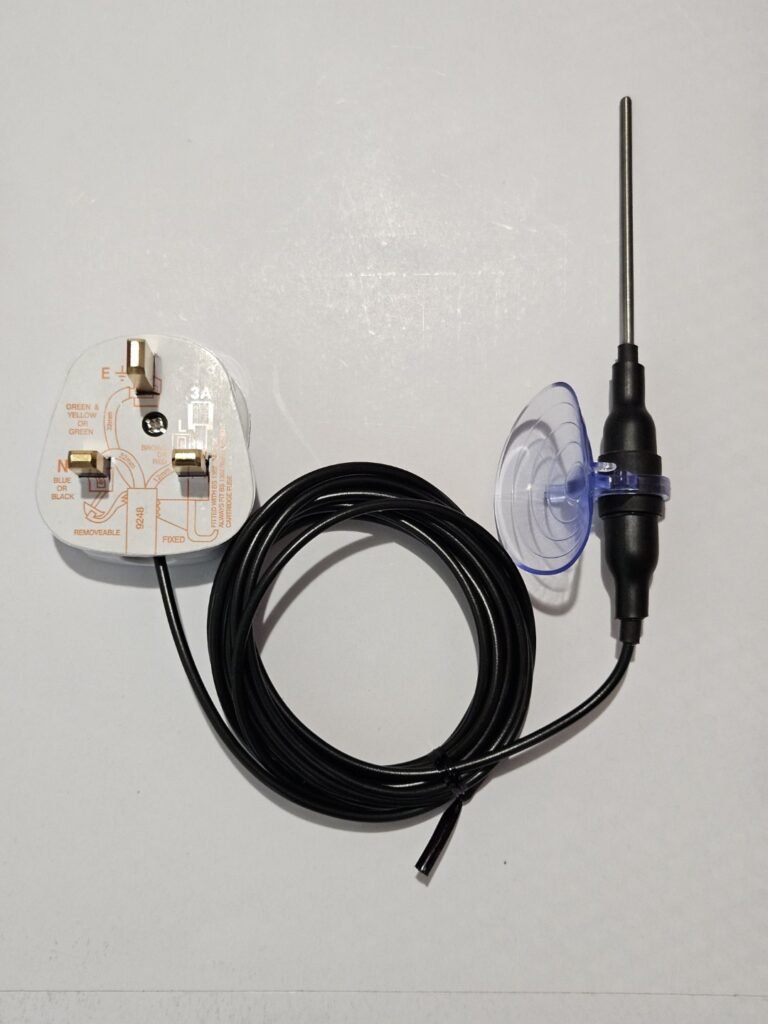
Titanium Grounding Probe
Why You Should Use a Titanium Grounding Probe in Your Aquarium.
Stray electrical voltage is a common but often overlooked issue in both marine and freshwater aquariums. Pumps, heaters, wavemakers, and lighting systems can all leak small amounts of electricity into the water. While this voltage is usually low, it can still cause discomfort to hobbyists and stress to aquatic life. A titanium grounding probe provides a simple, effective, and inexpensive solution to eliminate this problem and create a safer environment for both you and your tank inhabitants.
Below is a detailed explanation of why grounding probes matter, how they work, and the specific benefits of using a titanium model like our ReefRacks Titanium Grounding Probe.
What Is Stray Voltage and Why Does It Matter?
Stray voltage occurs when electrical equipment in or around the aquarium leaks current into the water. This can happen due to:
• Aging or faulty equipment
• Cracked heater casings
• Worn pump seals
• Salt creep causing conductive paths
• Poor insulation
• Even if the voltage is minor, it can still cause:
• Tingling or mild shocks when you place your hand in the tank
• Stress responses in fish
• Potential contribution to conditions such as HLLE (Head and Lateral Line Erosion) in marine species (as widely discussed in reefing communities) [1]
A grounding probe provides a safe path for this voltage to exit the system.
How a Titanium Grounding Probe Works
A grounding probe creates a positive electrical ground inside the aquarium. When properly installed and plugged into a grounded outlet, it directs any stray voltage safely away from the water and into the earth.
Our ReefRacks probe:
• Eliminates minor stray voltage generated by pumps, heaters, lights, and other equipment
• Prevents electrical shocks when placing your hand in the tank
• Protects both the aquarist and the livestock by stabilising the electrical environment [2]
This makes it a crucial safety device—especially in saltwater systems where conductivity is naturally high.
Why Titanium? Key Advantages
Titanium is the ideal material for aquarium grounding probes because it is:
1. Non‑corrosive and long‑lasting
We use commercially pure solid titanium, which resists corrosion in both freshwater and marine environments. This ensures long‑term reliability without leaching metals into the water. [2]
2. Safe for all aquarium types
Titanium is inert and aquarium‑safe, making it suitable for:
• Reef tanks
• Fish‑only marine systems
• Freshwater aquariums
• Planted tanks
3. Strong and durable
Titanium maintains structural integrity even under constant submersion and exposure to saltwater.
Benefits of Using a Titanium Grounding Probe:
1. Eliminates Stray Voltage
The primary benefit is the removal of unwanted electrical current from the water. This helps prevent:
Tingling sensations or shocks when touching the water
Stress in fish and corals
Behavioural abnormalities caused by electrical irritation[2]
2. Improves Safety for the Aquarist
If a piece of equipment fails, the grounding probe provides a low‑resistance path to ground, reducing the risk of electrical shock. This is especially important when working with wet hands or standing on damp floors. [3]
3. Enhances Livestock Health
Stray voltage has been linked to stress‑related symptoms in fish. By removing it, you create a more stable and natural environment. Reefing communities frequently note reduced stress behaviours when grounding probes are used. [1]
4. Works Seamlessly With Safety Devices
Your product page recommends pairing the probe with an RCD adaptor (UK equivalent of a GFCI) for maximum protection. This combination ensures that if a fault occurs, the RCD will trip immediately. [2]
5. Easy Installation
• The ReefRacks Titanium Grounding Probe is designed for quick setup:
• Includes a suction cup for mounting
• Comes with a 6‑foot cable and UK plug
• Works best when the titanium rod is partially above the waterline
• Can be installed in the display tank or sump[2]
Installation Tips
• Clean the glass thoroughly with a mild white vinegar and water mixture before attaching the suction cup
• Mount the suction cup above the waterline to prevent hardening
• Ensure the titanium rod is partially submerged
• Always plug the probe into a grounded outlet
• Use an RCD adaptor for added safety[2]
If you have a sump and still feel stray voltage, slow water flow can cause breaks in electrical continuity. In such cases, placing the probe in the sump or using a second probe may be necessary. [4]
Conclusion
A titanium grounding probe is a simple, inexpensive, and highly effective tool for improving aquarium safety. It protects both you and your aquatic life from stray voltage, reduces stress in fish, and ensures a more stable electrical environment. The ReefRacks Titanium Grounding Probe stands out thanks to its non‑corrosive titanium construction, easy installation, and compatibility with all aquarium types.
For anyone running an aquarium—especially a marine system—adding a grounding probe is a smart, proactive step toward a safer and healthier tank.
References
[1]: how to install an aquarium grounding probe in less than a minute. https://www.saltwateraquariumblog.com/install-aquarium-grounding-probe-less-minute/
[2]: Aquarium Titanium Grounding Probe – ReefRacks UK. https://reefracks.co.uk/product/titanium-grounding-probe/
[3]: Using Ground Probes in Aquariums | Reef2Reef. https://www.reef2reef.com/threads/using-ground-probes-in-aquariums.555682/
[4]: FAQ – ReefRacks UK. https://reefracks.co.uk/faq/